
CAPABILITIES / CATEGORY MANAGEMENT
Category management and retail execution
The planogram decides your revenue before your salesforce ever gets involved.
Become the buyer's category advisor and the orders follow.
Category strategy, planograms, pricing, and promotion for brands that live or die at retail.
WHERE THIS USUALLY STARTS
Six situations we recognize on the first call.
Common friction points where domestic growth stalls or international execution falters.
Your planogram has 68 SKUs and 20 of them do not sell.
Your shelf position was negotiated two years ago and has not been reviewed since.
Your private-label sourcing is opaque, you do not know the origin or the true cost.
Your category is commoditizing and price is the only lever left.
What we do

Category management and planogram requirements.
Domestic and international pricing.
Promotion planning.
Customer insight and segmentation.
Product localization.
Store format and portfolio decisions.
Supply chain and sourcing strategy, including staff based in Asia.
The story
Retail margins shrank and buyers stopped taking sales calls. The way in is to bring the buyer category intelligence they cannot get elsewhere, and to keep bringing it after the first order.
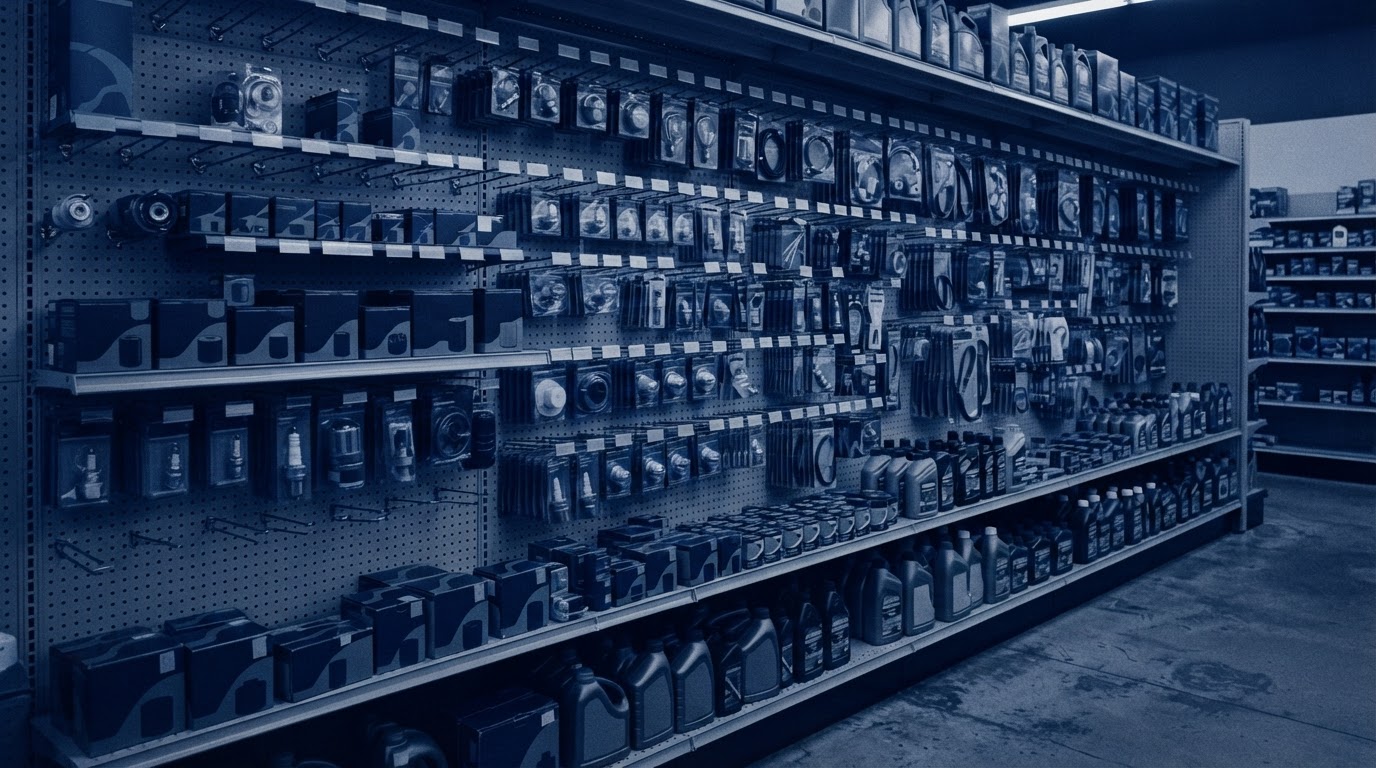
The AutoZone 68-SKU four-foot planogram is one documented example: a full category presence built and maintained across stores in the United States and Mexico. What a planogram is is the document that decides whether a product sells or gathers dust. For the broader distribution discipline, see retail distribution strategy, and for the sectors we serve, see mass retail and CPG.
The engagement
Methodology & Operating Execution
Structured delivery model built on 20+ years of operational field execution across global markets.
What the work involves
Category management means we become the buyer's category advisor, bringing category intelligence the buyer cannot get elsewhere and keeping it coming after the first order. The work covers category management and planogram requirements, domestic and international pricing, promotion planning, customer insight and segmentation, product localization, store format and portfolio decisions, and supply chain and sourcing strategy including staff based in Asia.
How the work runs
We begin by building the category view the buyer is missing, then translate it into planogram, pricing and promotion recommendations that hold across markets. Retail margins shrank and buyers stopped taking sales calls, so the way in is data and a category view, not a pitch. In steady state, the order follows the advice, pricing holds across markets, and the planogram is set to your category strategy, not to whoever called last.
What changes when it is working
The order follows the advice instead of the relationship. Pricing holds across markets. And the planogram is set to your category strategy, not to whoever called last. The buyer treats you as a category advisor, which is a different and more durable position than vendor.
FAQ
Questions before you sign
We become the buyer's category advisor. The way in is to bring the buyer category intelligence they cannot get elsewhere, and to keep bringing it after the first order. The planogram follows the advice.
Category management and planogram requirements, domestic and international pricing, promotion planning, customer insight and segmentation, product localization, store format and portfolio decisions, and supply chain and sourcing strategy including staff based in Asia.
Retail margins shrank and the call has to be worth the buyer's time. We bring data and a category view, not a pitch. That is what earns the second meeting and the shelf reset.
The order follows the advice instead of the relationship. Pricing holds across markets. And the planogram is set to your category strategy, not to whoever called last.
A manufacturer had a 68-SKU planogram at AutoZone and was losing shelf position to a competitor with fewer SKUs and better facings.A decision under uncertainty
The trade-off was between fighting for the full 68 or cutting to the 40 that actually sold. GLOWINT chose the cut, restructured the planogram, renegotiated the facing count, and redirected the freed shelf space to higher-velocity SKUs. Sell-through improved because the shelf was curated, not just stocked.
WHERE THIS GOES NEXT
Where this usually starts.
A two-week diagnostic, on site, with your internal and external stakeholders. You get a written view of where the constraint actually sits, what it would take to move it, and whether we are the right firm to help. If we are not, we will say so.
Start a conversation