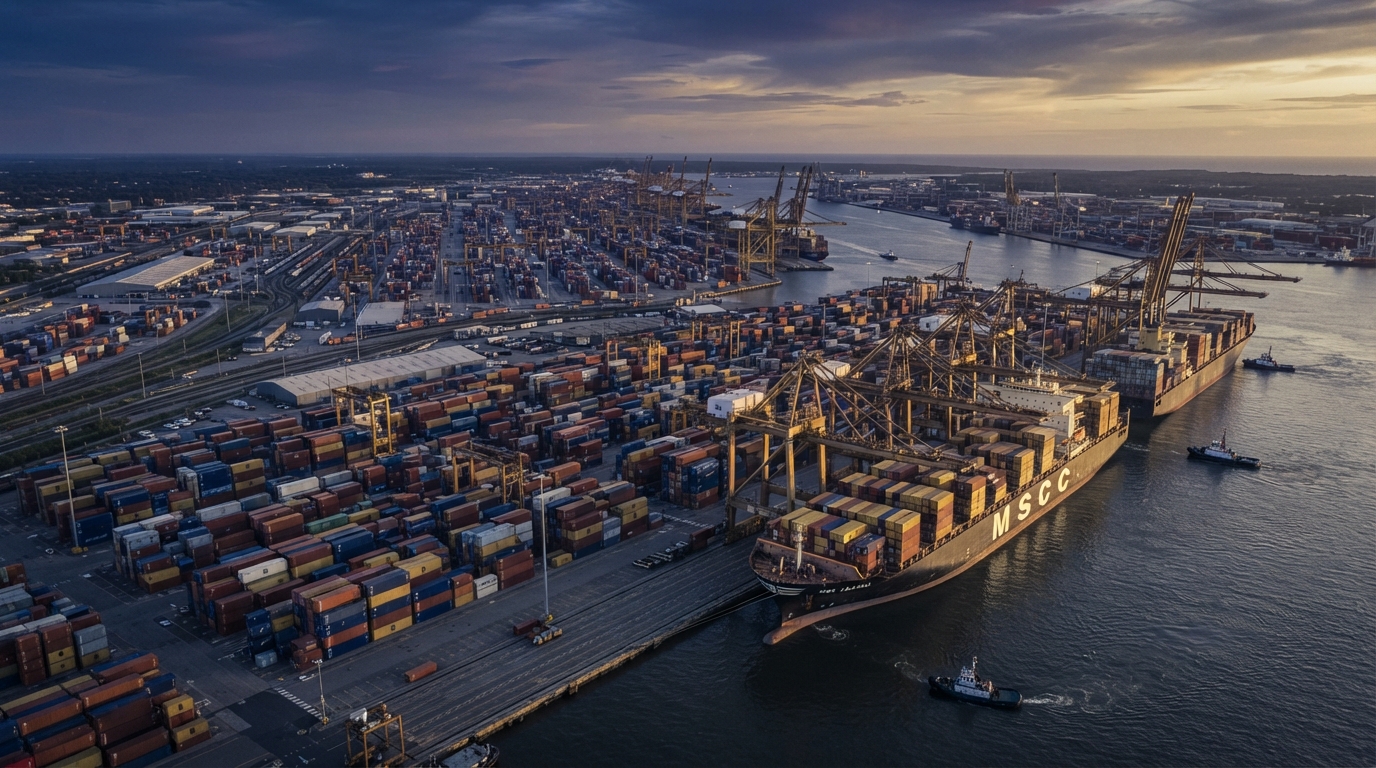
Nearshoring is the decision to move manufacturing and supply chain operations from a distant country, typically China or Southeast Asia, to a country closer to the end customer. For manufacturers serving the United States market, nearshoring means Latin America: Mexico first, then Colombia, Costa Rica, and the broader region. The drivers are operational, not political. Long supply chains are fragile. A container that takes six weeks to cross the Pacific, passes through two port systems, and sits in customs for ten days is a supply chain with six weeks of inventory risk, six weeks of demand lag, and ten days of regulatory exposure. When the port closes, the factory stops. When demand shifts, the inventory is already on the water. Nearshoring compresses that timeline. A factory in Mexico serving the United States can ship by road in days, not weeks. A sourcing corridor through Central America can be managed with the same time zone, the same business day, and the same legal framework. The trade-off is cost, Latin American manufacturing is more expensive than Asian manufacturing on a unit basis, but the total cost of ownership, including inventory carry, obsolescence, and supply disruption, is often lower. GLOWINT has run sourcing corridors out of Asia into Latin America since 2019. We understand both ends of the decision. Nearshoring is not about leaving China. It is about building a supply chain that can flex between near and far sources depending on cost, risk, and lead time. The manufacturer that can shift volume between a Mexican plant and a Chinese plant, without dropping a retail account, is the manufacturer that wins when conditions change. Nearshoring is a supply chain and manufacturing decision. It is not IT staffing, and it is not business process outsourcing. It is the physical movement of goods, and it requires physical relationships: factory operators, logistics providers, customs brokers, and retail buyers who will accept product from a new origin. That is the work.
Operations & Sustainability
What nearshoring means for manufacturers
Nearshoring is a supply decision that gets made as a cost decision, and that is why it disappoints.
Nearshoring is the relocation of manufacturing and supply chain operations from distant offshore markets to countries closer to the end customer. For manufacturers serving the United States, that means Latin America.
WHERE THIS USUALLY STARTS
Six situations we recognize on the first call.
Common friction points where domestic growth stalls or international execution falters.
Your supply chain is six weeks of inventory risk on the water.
You are nearshoring on unit cost and ignoring total cost of ownership.
Your Mexican plant and your Chinese plant cannot flex volume between them.
You have a nearshoring strategy and no factory operator, customs broker, or retail buyer on the ground.
For the practical application, see our LATAM nearshoring services and our global sourcing practice.
AutoZone needed a private-label sourcing corridor from China into Latin American retail.A decision under uncertainty
The trade-off was between cost and resilience, Asian manufacturing was cheaper, but the supply chain was six weeks of inventory risk on the water. GLOWINT built the corridor in 2019, flexing volume between near and far sources. The corridor has held through port closures and demand shifts.
WHERE THIS GOES NEXT
Where this usually starts.
A two-week diagnostic, on site, with your internal and external stakeholders. You get a written view of where the constraint actually sits, what it would take to move it, and whether we are the right firm to help. If we are not, we will say so.
Start a conversationFAQ
Questions before you sign
The decision to move manufacturing and supply chain operations from a distant country, typically China or Southeast Asia, to a country closer to the end customer. For manufacturers serving the United States, that means Latin America.
Long supply chains are fragile. A container that takes six weeks to cross the Pacific carries six weeks of inventory risk and demand lag. Nearshoring compresses that timeline so a factory in Mexico can ship by road in days.
No. It is about building a supply chain that can flex between near and far sources depending on cost, risk and lead time. The manufacturer that can shift volume between a Mexican plant and a Chinese plant without dropping a retail account wins when conditions change.
No. It is a supply chain and manufacturing decision, the physical movement of goods. It requires physical relationships: factory operators, logistics providers, customs brokers and retail buyers who will accept product from a new origin.
Related capability
Operations & Sustainability